Mercedes Brake Wear Sensor Fault
You’re on the way back from Taunton in your Mercedes when the brake warning light comes on. New brake pads, fitted only recently, and yet there it is: the dashboard telling you something about the brakes isn’t right. You spend the drive home working out what could possibly be wrong.
It’s a situation plenty of Mercedes owners run into. New brake pads, recently fitted, and yet the dashboard keeps showing the brake warning light every time the key turns. The obvious explanation doesn’t fit.
The instinct that something must still be wrong with the brake pads isn’t unreasonable, but the reality sits elsewhere. A separate electrical circuit reports pad condition to the dashboard, and that circuit has its own failure points, independent of anything mechanical.
A Mercedes brake warning light that stays on with brake pads in good condition can point to a Mercedes brake wear sensor fault. Corrosion at a connector, damaged wiring, a cracked housing, or any interruption in the wear sensor’s path can set off the dashboard’s alert just like a genuinely worn pad.
The braking components aren’t where the fault is. Brake pads, discs, callipers, and hydraulic lines all keep operating as designed. The car still brakes and stops as you’d expect. The brake warning light has appeared because the monitoring circuit has lost continuity, not because the braking system itself has failed.
The Electrical Link Between Your Mercedes Brake Pads and Dashboard
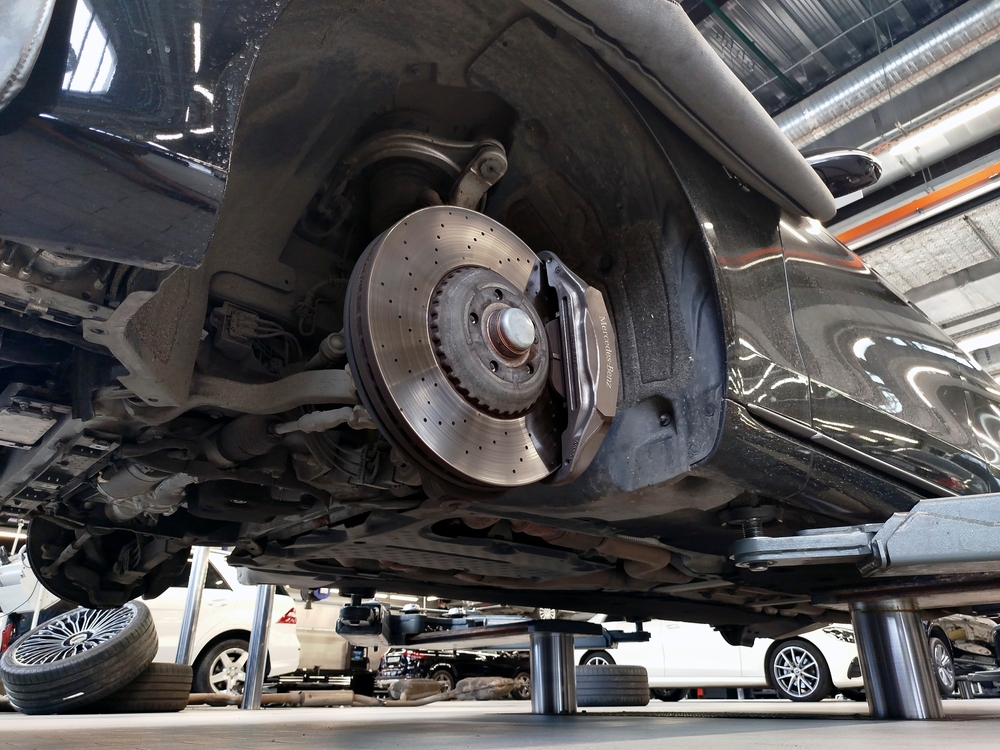
Modern Mercedes cars carry one or two brake wear sensors as standard. The first is mounted on an inner brake pad at the front axle. On many models, a second handles the same job at the rear. Each sensor is there for a single purpose: letting the car’s electrical system know when the brake pads have worn down to the point where they need replacing.
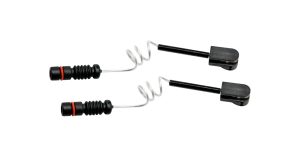
Physically, the sensor is a thin wire that sits either inside the brake pad’s friction material or clipped onto its backing. As the pad wears over miles of driving, the wire becomes exposed and is eventually worn through by the rotating brake disc. When that happens, the electrical circuit the wire forms opens up, and the dashboard receives the signal that the brake pads are at end of life.
By design, the brake wear sensor is a single-use component. It’s meant to wear through once, at the exact moment the brake pads reach minimum thickness. When the brake pads wear down through everyday driving, the sensor triggers the brake warning light as the pads reach that replacement point, and the sensor has done the job it was fitted for.
The question is, what happens when the same circuit opens for a reason that has nothing to do with brake pad wear?
This is where plenty of Mercedes drivers end up. The brake warning light returns each time the engine starts. The brake pads have just been fitted. The sensor circuit, meanwhile, has already been interrupted by something unrelated to pad wear, and the car can’t tell the two situations apart.
What Could Be The Reason Behind Your Mercedes Brake Warning Light
A small electrical current travels through the sensor wire, and the car continuously checks whether that current has a complete path. The moment that path opens, the brake warning light comes on. Pad wear, corrosion at the connector, damaged wiring, a cracked housing: any of these produces the same reading from the electrical system’s perspective.
Road grit used heavily in British winters is what drives Mercedes brake sensor corrosion over time.
The sensor and its connector sit in one of the most exposed parts of the car, low down, tucked behind the wheel, close to the road surface. They absorb the full brunt of what winter roads throw up. Spray, grit, salt, and standing water all land on that small area of electrical connection.
Given enough time, the moisture can get past a seal and into the connector housing or along the wire itself. Corrosion grows across the contact points, the flow of current drops, and the circuit eventually opens. From the car’s side of things, the outcome can’t be told apart from a pad that has actually worn through: the sensor circuit has broken, so the dashboard shows the same warning light.
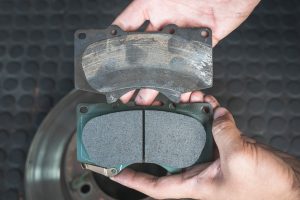
A pad check on its own isn’t the whole answer. Even when the brake pads are in good shape, the sensor circuit can be where the fault sits. Because it runs parallel to the mechanical braking components, the fault stays on the electrical side and doesn’t show up on a visual pad inspection.
If any of that sounds like your Mercedes, Shires Garage, Langport can trace the sensor circuit through and locate the fault at its source.
Mercedes Models Most Affected by Brake Sensor Corrosion
Brake sensors come fitted across the modern Mercedes range, and any model that uses them can develop the fault. Three Mercedes models in particular show this pattern:
- C-Class (2016 onwards)
- E-Class (2016 onwards)
- A-Class (2016 onwards)
A Mercedes C-Class brake sensor fault turns up at Shires Garage with the E-Class and A-Class not far behind. All three sit among the most widespread Mercedes models on UK roads, which is part of why they show the pattern: higher numbers of cars spending British winters on salted and gritted routes.
The bottom line is, three models don’t make an exhaustive list. Any Mercedes with brake wear sensors on its front or rear axle can run into Mercedes brake sensor corrosion, particularly on vehicles that accumulate British winter mileage. If your model isn’t one of the three listed above but the brake warning light is lit while the brake pads still have plenty of life, the sensor circuit is worth a closer look.
Whether the dashboard is showing a Mercedes C-Class brake sensor fault, an E-Class warning, or the same story on an A-Class, call Shires Garage, Langport on 01458 250570 and we’ll work through the sensor circuit with you.
Mercedes Brake Wear Sensor Replacement: How Shires Garage Handles It
At Shires Garage, Langport, every brake warning light investigation starts with a conversation. We want to hear what’s on your dashboard, when the warning first came on, and whether there’s been anything else out of the ordinary on the drive.
From there, our technicians move into a full technical evaluation that looks at far more than the brake pads alone. They check the state of the brake pads first, then move through the wear sensor itself, the wiring that runs back up into the car’s electrical system, and the connector at each end of the circuit. Any one of those points can be where the fault actually sits.
The repair takes shape around what the evaluation reveals. Where the fault comes down to the sensor alone, a Mercedes brake wear sensor replacement is the direct answer: our technicians unclip the corroded unit from the existing brake pad and fit a new one in its place. Where the brake pads themselves have also reached the end of their service life, the two jobs get done together. When the fault turns out to live in the wiring or the connector rather than the sensor itself, the repair focuses there instead.
We walk you through the evaluation findings and what the repair involves before any work starts on the car. You know exactly where things stand before we go ahead.
The good news is, where a corroded wear sensor has triggered the warning light without the brake pads actually wearing through, the mechanical side of the braking system is unaffected. The brake pads, discs, and callipers carry on doing what they’re built to do. Once our technicians fit the new sensor, the brake pad monitoring comes back online and the brake warning light clears.
Drop in to Shires Garage, Langport or call us on 01458 250570 to talk through your Mercedes’s symptoms and how we can help you.
Bring Your Mercedes Brake Warning Light to Shires Garage, Langport
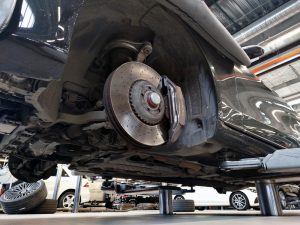
When you bring your Mercedes to Shires Garage, Langport, the work we carry out takes in the complete picture: the condition of the brake pads, the sensor itself, the wiring that links it back to the car’s electrical system, and the connector at each end of the circuit.
By choosing Shires Garage, you benefit from:
- Technicians who work through Mercedes brake sensor circuit faults as standard repair work
- Sensor, wiring, and connector testing combined with brake pad checks on every Mercedes visit
- A guarantee that covers parts and labour for a full 12 months
- A free courtesy car provided while your Mercedes is with us, for added convenience
Shires Garage’s reputation across Langport and Taunton comes from the Mercedes brake expertise and the care taken before any repair begins: a {{average-rating}} Google rating across {{review-count}} reviews reflects that.
Any Mercedes fitted with a brake wear sensor circuit can be booked in at Shires Garage, Langport for a thorough technical evaluation. From the C-Class through the E-Class and A-Class to every other model running the sensor, the process stays the same. Ring 01458 250570 when the dashboard is telling one story and the brake pads are telling another.
Common Questions About Mercedes Brake Warning Lights and Wear Sensors
Q: Why is my Mercedes brake warning light on when I’ve been told the pads are fine?
A: A Mercedes brake warning light can stay on even when the brake pads have been confirmed as having plenty of life left. The reason can lie in the brake wear sensor circuit rather than in the mechanical parts of the braking system. Inside the sensor’s circuit, a small electrical current tracks pad condition. When corrosion at a connector or damage along the wiring opens that circuit, the car treats the change as if the brake pads had worn through, and the dashboard warning light comes on. The brake pads themselves don’t need to be anywhere near the end of their life for this to happen.
Q: How much does a Mercedes brake wear sensor replacement cost?
A: The figure follows from what the evaluation turns up. Swapping a sensor onto brake pads that still have plenty of life runs to one price. Replacing the sensor together with brake pads that have also reached end of life runs to another. A fault that lives in the wiring or at the connector sits somewhere different again. A quote goes to you once the technical evaluation is complete, so the figure reflects what the repair actually needs.
Q: Can a corroded Mercedes brake sensor affect my braking?
A: The wear sensor does no mechanical braking work. Its role is to report when the brake pads are wearing thin, and that’s all. Corrosion, a failed connector, or a sensor that’s stopped working doesn’t change how the brakes actually bring the car to a halt. The brake pads, discs, callipers, and hydraulic system continue to do their work as designed. The catch is that the dashboard can’t confirm the cause on its own. A genuine pad wear fault sends the same warning, so separating the two scenarios takes a thorough technical evaluation that follows the sensor circuit end to end.
Q: How often do Mercedes brake wear sensors need replacing?
A: A brake wear sensor is intended for replacement at the same service interval as the brake pads it sits alongside: when the pads get changed, the sensor does too. British roads don’t always respect that timeline. Exposure to winter grit, salt, and standing water can end a sensor’s working life long before the friction material has been used up. Mileage isn’t a useful guide because the outcome depends on the condition of the sensor and its connector. If a Mercedes brake warning light shows up with brake pads having life left, the first port of call is the sensor circuit.