Mercedes Water Pump Failure
You’re halfway through your journey when the temperature gauge starts climbing. A coolant warning lights up on the dashboard. Within minutes you’re pulling over, trying to work out what’s gone wrong and whether it’s safe to keep driving.
That’s the nature of a Mercedes water pump failure.
It’s not obvious until it’s already happening, and most owners don’t think about their water pump until it stops working. By then, the engine’s already running hot, and the damage window is open.
If your Mercedes diesel has started overheating, or a garage has flagged the water pump as the cause, this guide covers what’s happening, why it matters, and what needs to happen next. The focus is on Mercedes diesel models fitted with the OM654 2.0-litre diesel engine from 2016 onwards, where water pump failure has become a well-documented fault.
What happens when a Mercedes water pump fails? The water pump is the engine’s cooling system’s main component. It pulls coolant through the engine block and cylinder head, carrying away combustion heat. When the pump fails, that circulation stops. Heat builds rapidly inside the engine. The temperature gauge climbs, or you’ll see a coolant warning on your dashboard. If left unchecked, engine temperature can exceed safe limits and cause internal damage that’s far more expensive to repair than the pump itself.
What the Water Pump Actually Does Inside Your Mercedes
Your engine generates intense heat during combustion. The cooling system’s job is to manage that heat and keep everything within a safe temperature range.
The cooling system removes that heat by circulating coolant through passages in the engine block and cylinder head. The coolant absorbs the heat, flows out through the radiator, where that heat escapes into the air, and returns to start the cycle again.
This happens thousands of times during a single drive.
On many Mercedes diesel models from 2016 onwards, particularly those fitted with the OM654 engine, the water pump is driven by the auxiliary belt. It spins continuously while the engine runs. The cooling system also includes electronic thermostats that adjust coolant flow based on what the engine needs moment to moment.
When the pump is in good condition, this system works as intended. But when the internal bearings or seals begin to fail, the pump loses its ability to move coolant, and the engine starts to heat up.
Why Mercedes Water Pump Failure Happens on These Engines
Water pump failure on Mercedes diesel models is a pattern that develops gradually. It doesn’t happen by accident; there are identifiable causes affecting even modern models like the Mercedes C-Class water pump.
Here are the reasons a Mercedes water pump fails:
- Bearing and seal deterioration: The pump’s bearings and seals endure relentless stress. With time, they deteriorate. A failing seal might appear as a small coolant puddle underneath the car or as visible weeping from the pump housing. Worn bearings cut the pump’s ability to circulate coolant.
- Impeller corrosion: The impeller is the rotating part that physically moves coolant through the system. Corrosion eats away at it, cutting the volume of coolant flowing through. The pump might continue spinning, but it pushes insufficient coolant to keep the engine cool.
- Coolant contamination: Aging or contaminated coolant forfeits its protective additives. Without them, it corrodes the pump’s internal parts. Seals harden, bearings rust, and the impeller erodes. Regular coolant changes prevent this, but if intervals slip, damage builds silently inside.
These causes often work together. Contaminated coolant speeds bearing wear and attacks seals. A leaking seal lets coolant escape, dropping system pressure and cooling capacity. Once one issue begins, others follow.
Diagnosis matters. You can’t simply swap the pump and move on. A thorough inspection shows what triggered the failure and whether the cooling system elsewhere has suffered damage.
How to Recognise Mercedes Water Pump Failure: Warning Signs to Watch For
The challenge with this fault is that it doesn’t always announce itself. Some owners notice the temperature climbing gradually over several days, while others see it spike suddenly without warning.
Here’s what to watch for:
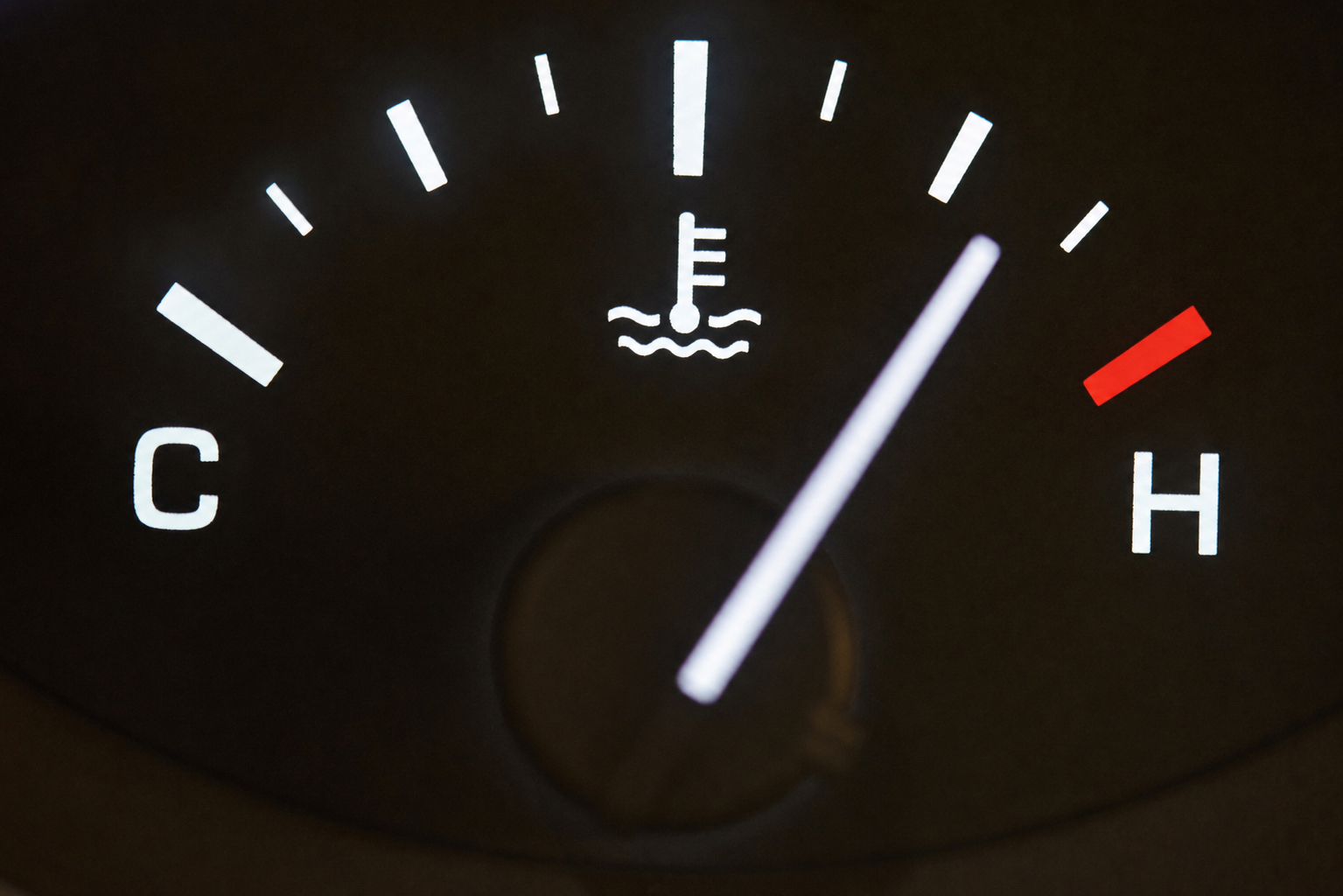
- Temperature gauge climbing: This is usually the first thing you’ll spot. The gauge creeps higher from where it normally rests, either steadily or in one sudden movement. Pull over safely if you see this happening, even if the engine feels fine.
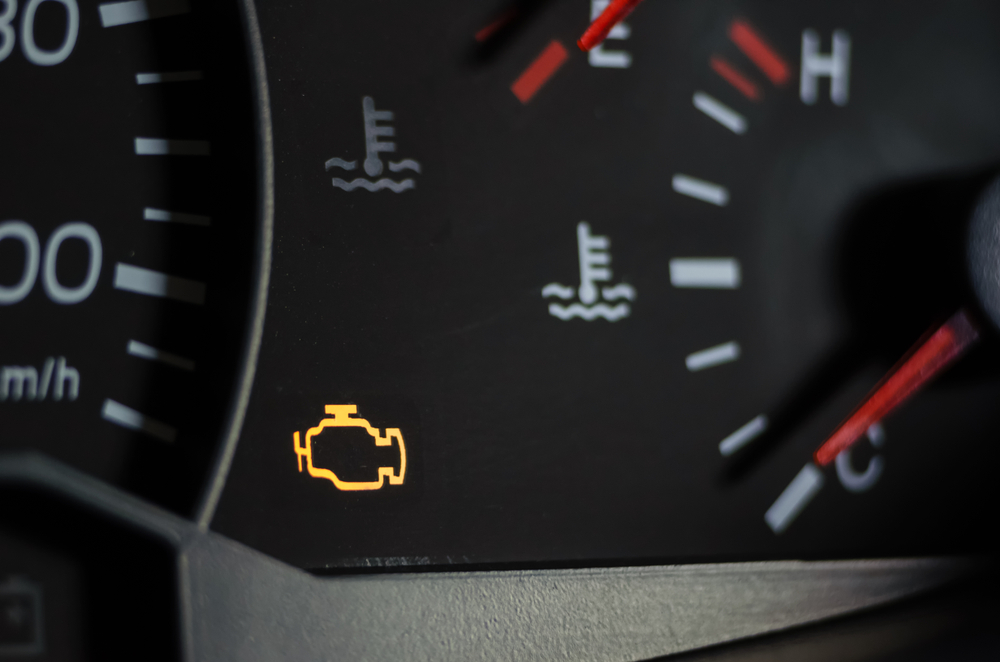
- Coolant warning light: A warning message about coolant appears on your dashboard, sometimes paired with an audible signal. These alerts exist to warn you before damage becomes serious, so treat them as urgent matters. Stop driving and let things cool down before looking further.
- Coolant leak: Liquid pooling or a damp patch underneath your car signals a leak. Even small losses of coolant weaken system pressure and let air in, both of which hurt cooling capacity and risk overheating.
- Steam from under the bonnet: Steam or visible mist rising from the engine bay shows coolant has either boiled away or escaped the pressurised system. Your engine temperature has climbed beyond safe bounds. Stop immediately and allow cooling before moving further.
- Reduced power or limp mode: Your engine management system senses dangerous temperatures and cuts power to safeguard itself. A Mercedes that suddenly drives sluggishly or ignores throttle input suggests thermal protection has kicked in. This shows the cooling circuit needs instant attention.
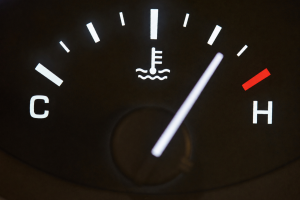
These symptoms can stem from other cooling system faults too, so they don’t prove a water pump failure. However, if you’re asking “why is my Mercedes overheating?” the pump ranks among the first parts to check. Whether it’s a Mercedes C-Class water pump issue or another model, systematic diagnosis is key.
Get in touch with Shires Garage, Langport and we’ll advise on the best next step.
The Consequences of Ignoring a Mercedes Water Pump Fault
Nobody wants to read this section, but it’s one of the most important in this blog.
When the water pump stops circulating coolant, heat builds in the cylinder head and engine block with nowhere to go. The longer the engine runs while overheating, the more damage builds up inside.
Extreme heat causes the head gasket to fail, allowing coolant and combustion gases to mix. Once that happens, the repair becomes significantly more involved and more expensive than replacing the water pump alone. In the worst cases, sustained overheating warps or cracks the cylinder head, which is one of the most costly repairs on any engine.
The good news?
A Mercedes water pump replacement, carried out before secondary damage occurs, is a repair that an experienced specialist handles with confidence. Catching the fault early costs far less than dealing with the consequences of sustained overheating.
Which Mercedes Diesel Models Are Affected by Water Pump Failure
Water pump failure on Mercedes diesels is tied to the engine family rather than a single model.
The 2.0-litre diesel engine fitted to a wide range of Mercedes models from 2016 onwards operates a belt-driven water pump. The OM654 2.0-litre engine is where this fault is most frequently reported.
Models most commonly affected include:
- Mercedes C-Class diesel (C200d, C220d, C300d) from 2016 onwards
- Mercedes E-Class diesel (E200d, E220d, E300d) from 2016 onwards
However, the same 2.0-litre diesel engine also powers many other Mercedes models, including the GLC, A-Class, GLA, and GLB. Any of these models can develop the same water pump fault. Don’t assume your Mercedes is unaffected just because it’s not a C-Class or E-Class. Every model fitted with the OM654 engine carries the same risk.
If you’re unsure whether your model uses this engine, or you’ve been asking “why is my Mercedes overheating?”, Shires Garage can check for you as part of a technical evaluation.
How Shires Garage Investigates and Repairs Mercedes Water Pump Faults
Several different cooling system faults can produce the same overheating symptoms. Swapping a component without confirming the cause wastes time and money. That’s why a structured technical evaluation comes before any parts are replaced.
When you bring your Mercedes to Shires Garage, we start with a conversation:
- When did the overheating start?
- Has it occurred once or multiple times?
- What warning signs did you notice?
These details help our technicians identify the likely cause before any work begins.
We then conduct a detailed evaluation using manufacturer software and practical expertise. Fault codes are retrieved, leaks checked, pressure tested, and pump function verified. The thermostat, hoses, and radiator receive inspection.
Once the cause is clear, we contact you with our findings and next steps. Work begins only after you’ve approved it.
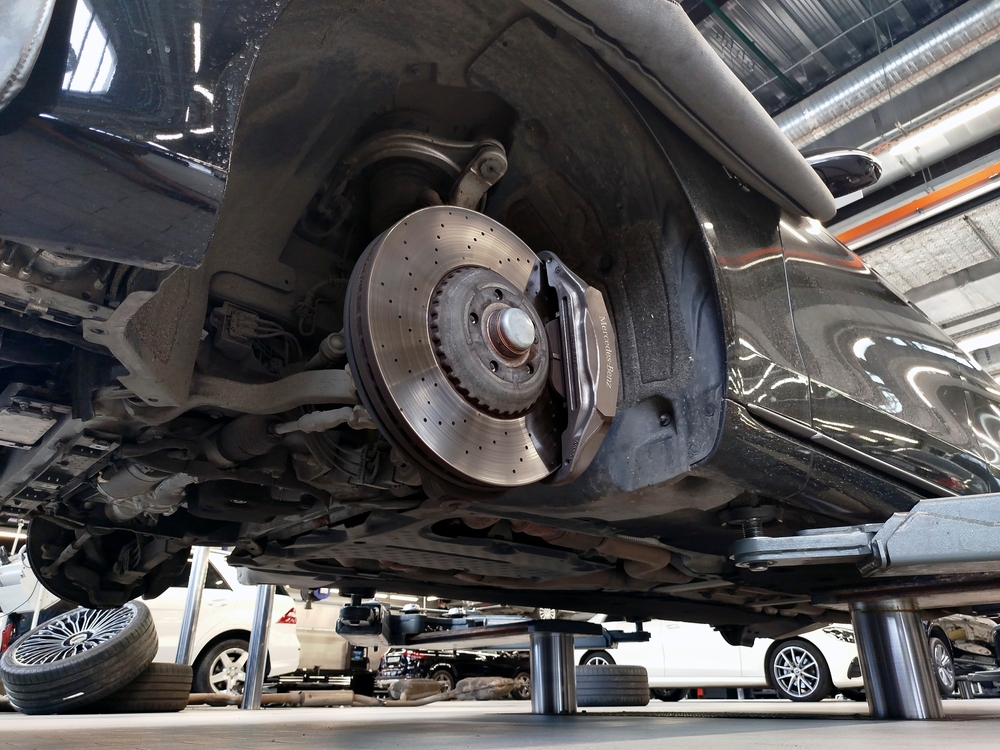
The repair removes the failed pump, installs a manufacturer-approved replacement, and addresses related components. The cooling system is drained, refilled, bled, pressure tested, and verified through an engine run.
Whatever Mercedes diesel you own, a water pump replacement is a repair an experienced specialist performs with confidence. Identified early, it protects your engine from far more expensive damage down the road.
Why Drivers Across Langport and Taunton Choose Shires Garage
A failed water pump looks worrying. Left unchecked, it becomes worse. Yet when you have a technician who knows Mercedes diesel engines confirming the root cause, it becomes a manageable fix.
At Shires Garage, our technicians combine in-depth expertise with manufacturer-grade software to pinpoint why your Mercedes overheating has happened. Each job starts with a thorough technical evaluation, we explain what we’ve found, and only move forward once you’ve approved the plan.
Here’s why drivers across Langport and Taunton choose Shires Garage for Mercedes water pump repairs:
- 12 months parts and labour guarantee on all work carried out, giving you confidence in the repair.
- Courtesy car available while your Mercedes is being repaired, so your day isn’t disrupted.
- Dealer-level expertise at better than dealership value.
- Experienced technicians with manufacturer software to diagnose cooling system faults accurately.
Join the {{review-count}} customers who’ve rated us {{average-rating}} stars on Google for expert repairs and great value.
If your Mercedes is running hot or showing coolant warnings, call Shires Garage on 01458 250570 today. The sooner it’s assessed, the less chance there is of further damage.
Common Questions About Mercedes Water Pump Failure
How do I know if my Mercedes water pump has failed?
Look for a temperature gauge climbing past normal, a coolant alert on your dashboard, puddles or seepage beneath the car, steam from the engine bay, or your engine shifting into reduced power mode. Other cooling faults can produce these same signals, which is why a trained technician’s assessment pinpoints what’s genuinely wrong.
Can I keep driving if my Mercedes is overheating?
No. Find a safe spot and stop right away. Driving further multiplies the damage risk and final repair cost, which can include head gasket failure and warped cylinder heads. Call Shires Garage on 01458 250570 to book a technical evaluation without delay.
How long does a Mercedes water pump replacement take?
The timeframe depends on your specific model and any associated component work. Your technician outlines the duration once evaluation concludes and you’ve signed off. Shires Garage prioritises keeping you informed before any work starts.
How much does a Mercedes water pump replacement cost?
Cost hinges on your model and how much work is involved. Shires Garage, Langport walks you through our assessment and gives you a full quote before we start anything. The bottom line: early pump replacement costs far less than repairing secondary damage from prolonged overheating.