Mercedes Brake Pads
Some Mercedes drivers judge the health of their brakes by how the car feels from one journey to the next.
If the pedal seems firm and the car slows as expected, it’s easy to believe the brake pads are still in good shape. It sounds sensible, doesn’t it?
The problem is that pedal feel doesn’t always reveal how worn the pads actually are. Brake pads can run much lower than most drivers realise before anything becomes noticeable, and by the time something does feel different, the work involved may already be more complicated than it could have been.
At Shires Garage in Langport, we meet Mercedes owners looking for clarity after a warning symbol appears, they hear something unfamiliar, or the car simply doesn’t feel quite the same under braking. The same questions tend to follow:
- “Do I need new brake pads?”
- “Is this warning light something I should act on now?”
- “Can it wait for the next service?”
This guide brings together clear answers to the questions we hear most. It explains what Mercedes brake pad warnings are telling you, how wear progresses, and what can happen if it’s left too long, giving you straightforward, technician-led advice you can rely on.

So let’s start with the Mercedes question we’re asked time and time again:
How Do I Know If I Need New Mercedes Brake Pads?
At Shires Garage, we’ll check your brake pads visually during every Mercedes Service, and our specialists will let you know when they’re getting close to their safe minimum. Keeping up with your scheduled servicing is the best way to stay ahead of brake pad wear, because even when everything feels normal, the pads may already be far thinner than they seem from the driver’s seat.
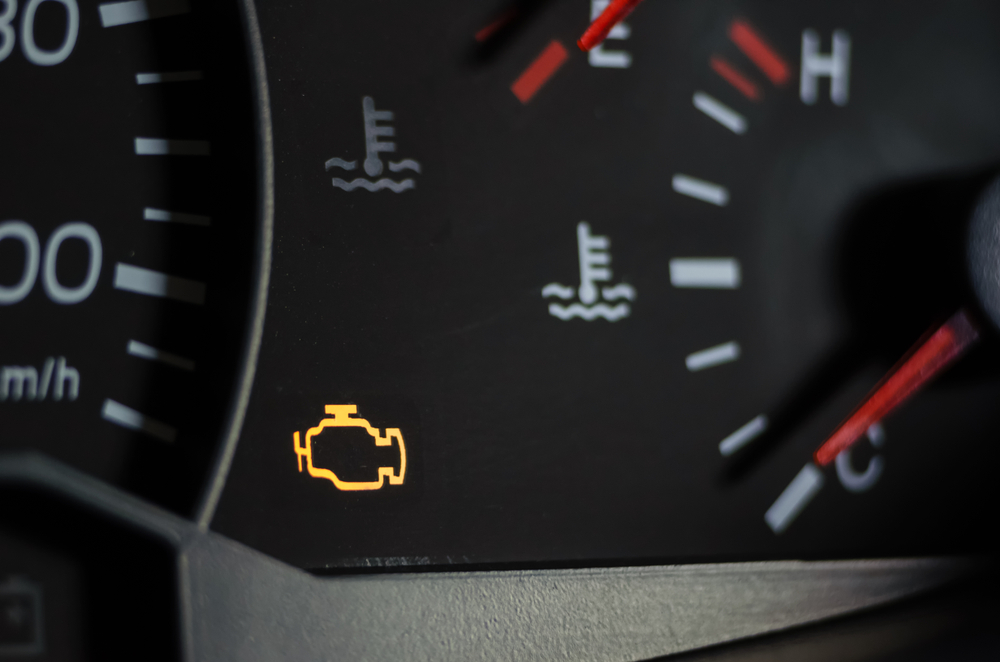
Many Mercedes models include electronic wear sensors to monitor pad thickness. If a dashboard warning light appears between services, it means the pads have reached a point where their ability to handle heat and maintain safe braking is reduced. That warning is designed to prompt attention. It’s not something to overlook; it’s the moment to call Shires Garage on 01458 250570 to arrange a Mercedes brake pad check.
If you hear a squealing sound when using the brakes, it may be the mechanical wear indicator coming into contact with the brake disc. This usually happens much later in the wear cycle and confirms the pads are overdue for replacement. Leaving them until this point can allow the metal backing plate to touch the disc surface, which can cause heavy scoring and turn what should have been a simple brake pad change into a more expensive repair.
For a clear, no-nonsense explanation of brake pad fundamentals, feel free to take a look at our general brake pad guide.
What Are The Signs Of Worn Mercedes Brake Pads?
Worn Mercedes brake pads usually give you several hints as they get low. On many models, the earliest sign is a dashboard warning light triggered by the electronic sensor attached to the pad. After that, you may hear a squealing sound when braking, caused by the mechanical wear indicator making contact with the brake disc. It is designed to be noticeable, so you’re aware the pads are running short.
Some symptoms are far less obvious. You might feel the pedal needing a touch more pressure before the brakes engage, or you might pick up a faint vibration as the car slows. But it’s also quite possible not to feel any of this. Early pad wear can be difficult to detect from behind the wheel, and many drivers only realise the pads are low once they’re very near the limit.
That’s why the brake pad inspection completed as part of your normal service is so important.
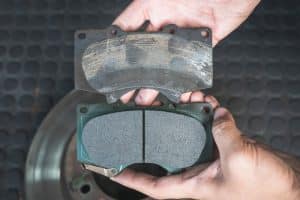
What Happens If You Don’t Change Your Mercedes Brake Pads?
Postponing a Mercedes brake pad change can feel harmless, especially if the brakes still seem to behave normally. But once the pad material becomes too thin, the problems can escalate quickly, and the repair can become far more complex than a simple pad replacement.
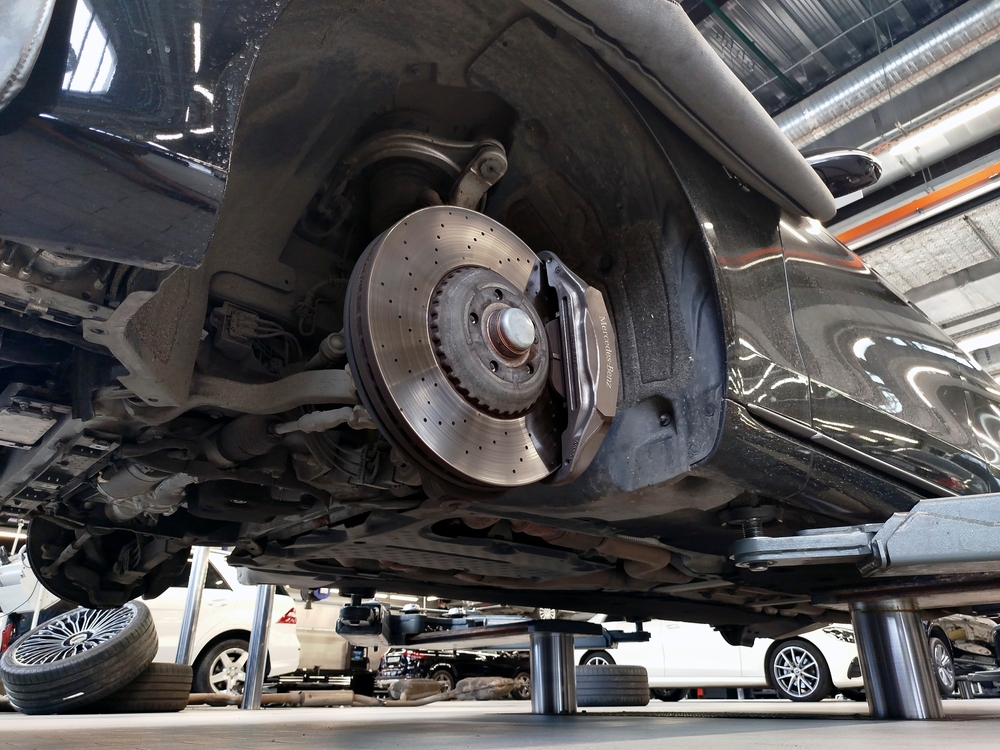
Mercedes brake pads and discs are built to handle high temperatures during everyday driving, but when the pad material drops too low, excess heat can build up more easily. When that happens, the brake discs can start to wear unevenly, brake fluid temperatures may increase under heavier braking, and the calliper pistons can be exposed to more heat than they’re designed to tolerate. What should have been a routine Mercedes brake pad replacement can turn into a broader repair involving discs, sensors and, at times, calliper components.
At Shires Garage in Langport, we’ve seen occasions where the friction material has worn away entirely, and the metal backing plate has begun scraping against the brake disc. This produces a loud grinding noise and often leaves deep scoring that makes disc replacement unavoidable.
Most importantly, very low pads reduce your ability to stop the car effectively, especially during sudden braking or when the brakes are already hot. That drop in stopping performance is a real safety concern and becomes more likely the longer worn pads remain in use.
How Long Do Mercedes Brake Pads Last?
Mercedes brake pads don’t have a set replacement mileage or timescale, because their lifespan depends on the model, the braking setup, the type of pad fitted and, above all, the way and conditions in which the car is driven.
Each Mercedes model also places different demands on its braking system. Larger or more powerful vehicles can use up their pads more quickly simply because they generate higher braking loads. Models that use regenerative braking may rely on the friction brakes less during lighter driving, although this does not guarantee the pads will last for longer.
The most accurate way to know when Mercedes brake pads need replacing is through a brake check by a trained technician or by following the vehicle’s built-in brake pad wear warnings, rather than basing it on mileage alone.
Do Brake Pads Affect MOT Results?
Yes. Worn Mercedes brake pads can affect the outcome of an MOT. As part of the test, the examiner uses MOT brake performance equipment to measure the braking force and balance across the wheels. They also carry out a visual inspection where the pads are visible without removing any parts. If the pads are worn to the wear indicator or appear very close to the minimum safe thickness, this may be recorded as a major defect and the vehicle might not pass the test.
Even if the brakes seem to behave normally on the road, low pad thickness is considered a safety concern during the MOT and will need attention before the vehicle can pass.
Do Electric Mercedes Vehicles Need Brake Pad Replacements?
Yes. Mercedes EVs in the EQ range, such as the EQA, EQB, EQC, EQE and EQS, still rely on conventional brake pads and discs. Regenerative braking reduces how often the friction brakes are used, but it does not remove the need for pad or disc replacements.
During lighter driving, the electric motor provides much of the slowing force, meaning the friction brakes may operate less frequently. This can reduce wear in some circumstances, but not in every situation. How much regeneration takes place is influenced by several factors, including:
- Battery charge level
- Ambient and component temperature
- Selected driving mode
- Road speed
- Braking pressure from the driver
- If ABS/ESP systems engage
At Shires Garage, one of the common issues we see with Mercedes EVs is related to brake disc condition. When the friction brakes run cooler and aren’t used as often, the discs can develop corrosion or pitting, and their surfaces may become uneven. Brake pads can also glaze if they do not reach normal operating temperature from time to time.
These problems can affect braking performance even when the brake pads still have usable material remaining, which is why regular brake checks are essential for Mercedes electric vehicles.
Should I Change Front and Rear Brake Pads at the Same Time?
You don’t usually need to replace the front and rear Mercedes brake pads at the same time. Each axle wears at its own rate depending on driving conditions, braking demands and the design of the braking system. The important rule is that brake pads are always replaced as a pair on the same axle, based on their remaining thickness and the manufacturer’s limits.
Changing pads on only one side of an axle can lead to uneven braking and may compromise stability, which is why pads must always be fitted in axle pairs.
The best approach is to replace the pads on the axle that has reached its wear limit and have the other axle monitored during your routine servicing. This keeps the braking system functioning safely without replacing parts prematurely.
Mercedes Brake Pads: Professional Support and Quality Servicing at Shires Garage
Mercedes brake pads are engineered to provide smooth, dependable braking, but once the friction material wears too low, issues can start to build quickly. Keeping up with regular servicing is the most effective way to avoid this. When services are postponed, the earliest signs of brake wear can be missed, and by the time anything feels different behind the wheel, the pads may already be close to their minimum. Acting early helps protect the brake discs, maintains braking confidence and keeps your Mercedes performing properly.
If any of the symptoms in this guide resonate with you, our technicians are ready to assist. At Shires Garage, we follow the correct Mercedes procedures for every brake pad replacement and offer clear, honest advice throughout your visit.
Local drivers put their trust in us. We’re proud to hold a {{average-rating}}-star rating on Google, supported by {{review-count}} reviews from Mercedes owners who rely on us to keep their vehicles safe.
Whether you have a brake question or need to book your upcoming Mercedes service, call Shires Garage on 01458 250570 today.